Lights Fantastic

“It’s Swell!!”

Supervision by I. Freleng; Story by Sgt. Dave Monahan; Animation by Gil Turner; Musical Supervision by Carl W. Stalling. A Merrie Melody released on May 23, 1942.

Light is pretty fantastic stuff. I don’t mean the natural kind you can get from the sun. (That stuff causes cancer!) I mean the artificial kind that people use to give nature the finger, and turn night into diet day. And apart from Vegas, I’d say the best place to experience such a marvel, is New York City. What types of gags might we find just marveling at billboards?

One ad is typed out to us as if on a typewriter. But whoever is in charge of things, sure as heck can’t spell “stewpendaus.” And while you’re enjoying the sights that are lights, why not take a trip to Chinatown? (The bus is built like a rickshaw. At least it’s not as racially insensitive as it could have been.) One ad gives a free sample of what it’s promoting: an eye test! Being able to read the first line means you’re average. (Crap. I can make it out, but I can’t read that mess. Guess I need new contacts.) The next one means “above average” and the one below that is “exceptional!” And if you can read the bottom one, you clearly are a foreigner. (Who would bother to learn another language?)

What would a “Merrie Melody” be without a song number? (Still entertaining.) The ads come to life to serenade us. The featured song is “My High Polished Nose.” (“My Wild Irish Rose”) Next on the playbill: “Laugh, Clown, Laugh” performed by the mascot of Clown cakes and cookies. And as many can jokes as they can make! Coffee cans doing the can-can, while frequently showing off their cans! (Can there be anymore? It just can’t be! So I better can it, lest I get canned.)

One ad tries too hard. It tries to grab your attention with as much neon as they can afford. All for a tiny “Eat at Joe’s” message. (Freleng would use a similar gag in “Holiday for Shoestrings.” (Even using the same music piece.) And since this wasn’t the most story driven short, what better way to end it than with a music party? The dripping of coffee, the shaking of peanuts, and the dinging of a cowbell make an irresistible beat that has the rest of the ads dancing. Ending up with the same shot we began with. (What a bright idea.)

Personal Rating: 3

Hollywood Canine Canteen

“I’m a baaad bowwow.”

Directed by Robert McKimson; Story by Warren Foster; Animation by Cal Dalton, Don Williams, and Richard Bickenbach; Backgrounds by Richard H. Thomas; Musical Direction by Carl W. Stalling. A Merrie Melody released on April 20, 1946.

TADA! Welcome to the new and improved Wackyland2! When I said I was cancelling the blog, I just meant that I was giving Squarespace the boot. That place sucked. Here is a lot more space for me to stretch my creative wings. It’s the same great taste, but with a whole new package! With still hundreds of shorts left to address, we’d better get started!

Dogs are some of the greatest animals on the planet! Hollywood seems to think so too. As all the biggest stars (at least of the 1940s) all seem to own one. What’s more, they look a lot like their owners too, making it easy to tell who is who. So what do these dogs do when their owners are out being caricatured in Warner Bros. cartoons? They decide to start a nightclub all their own! And everyone of the canine type is invited! Upon entering, patrons can drop their (fur) coats at the entrance. And one doesn’t need to worry about filling your belly: Dogwood himself is on hand making some tasty bone sandwiches, and cleanup is nothing to worry about. We’ve got Laurel and Hardy’s dogs on cleanup duty. (Our dishes wind up extra clean. Seeing as how Laurel’s pooch, keeps accidentally dropping what he just dried back into the sink.) A young dog tries to call home, but has to wait as there are quite a number ahead of him. Not to worry, there is plenty of entertainment to keep one occupied. Why not listen to Leopold Bowwosky conduct? His musicians are playing the Hungarian Dances. (Taking reading breaks when waiting for their part, and breaking violins when performing their part) But some aren’t taking things too seriously. Lou Costello’s dog can’t be bothered to stay with his instrument and will leave in the middle of a performance to get a drink. (And more amusing than that, acting like a jerk when people tell him to get back to work) He just might ruin the song too, as he’ll mistake any flies on his sheet music for actual notes. And our young friend is still waiting to call. But there’s only one ahead of him now! Some dog’s try to make connections. Bing Crosby’s dog is serenading the pet of Dorothy Lamour. But he can’t quite compete with Frank Sinatra’s dog. (Mostly because the latter’s singing is too irresistible for Bing’s pooch to try and top) With a fresh batch of music (and the occasional box of fleas) everyone is really getting into the dancing groove. Well, almost everyone. Our young friend is finally allowed to call home. Hope his voice is strong enough. Since dog’s can’t use telephones, he has to make do with a megaphone.

Personal Rating: 2

Meet John Doughboy

“Our Open Door Policy is responsible for the Draft”

Supervision by Robert Clampett; Story by Warren Foster; Animation by Vive Risto; Musical Direction by Carl W. Stalling. A Looney Tune released on July 5, 1941.

Want to learn some military secrets? Secrets that are over seventy years old? Porky has got what you want to know! (Sadly, he disappears from the short after his introduction.) Well, what have we got? We see our factories that pour molten metal into tank shapes. (Without those pesky molds. Here in America, we just pour it out, and it takes the shape.) Planes are an essential part of are army. And they can do some pretty spectacular things. A spitfire plane can actually spit fire A couple of guys aren’t worried about being drafted. The bigger one tells the smaller one, that he especially doesn’t have to worry. He’s too short. Unfortunately for him, stilts WERE around by the forties. There are some pretty quick gags too. A machine gun nest is actually a nest for the gun, and we see some of The Draft Horses that actually were picked. (Seeing as they all came from South America, the general is probably just racist.) Considering their ethnicity, It’s no surprise they start a conga line. An anti-tank gun is being tested, but the idiots who are in charge are too busy having a cigarette measuring contest to fire the weapon. So, it’s a good thing that we have other tools to fight with. A land destroyer so fast, that all one can see is a blur. (Slow it down, and you’ll see it’s just Jack Benny and Rochester in their car. Whatever works.) Okay, so maybe we aren’t as prepared as we could be in the event of a war. At least, if all we want to do is fight back. We’ve got a lovely defense system. Should enemy planes ever fly by, Miss Liberty will give them a dose of pesticide. Takes care of those annoying pests.

Personal Rating: 2

The Weakly Reporter

“We love California”

 Supervision by Charles M. Jones; Story by Michael Maltese; Animation by Ben Washam; Musical Direction by Carl W. Stalling. A Merrie Melody released in 1944. Supervision by Charles M. Jones; Story by Michael Maltese; Animation by Ben Washam; Musical Direction by Carl W. Stalling. A Merrie Melody released in 1944.
With that said, who wants more topical humor from the forties? Hopefully, everyone did because that’s what you’re getting. While Wacky Blackout demonstrated how the country life reacts to the war, now we look at the urban side. (With bridging sequences done in a simple stick figure style, predating UPA by a good six years) With such a large war, automobiles are becoming more scarce. Those still around are frightened at the sight of  a horse-drawn cart. With such few cars, some people take to sharing a vehicle. Some go a “step” further and share shoes. Certain foods are really valuable and are delivered in an armored vehicle. (You laugh, but butter is precious to us Americans. It’s our favorite food!) Speaking of food, that’s a luxury now too. Lovely meat for sale. Only $1.19 for a sniff. (Smells like cow blood. So worth the investment) During these times, hoarders are looked upon with disdain. Unless you’re hoarding bonds. But in all seriousness, many men are now in service. What are the ladies doing? They’re still buying the latest styles. (That welder’s mask is you!) And girdles are now used to help win. The only downside is you can see the difference it makes without them. (Oh, you thought I was talking about a woman wearing it and not a man? That’s the short’s best joke) Ladies are now taking on more jobs. (And the men who are still around love to watch them.) But women fight in the war too. Putting lipstick over their gas masks, and training for fights by brawling over nylon. (How accurate.) Sexist jokes aside, they know what they are doing. When the factories stop, it’s a lady to the rescue! (The machine just needed her to insert a new bobby pin) Yes, we are doing a fine job of producing weapons really fast. So fast in fact, we can get a ship delivered before the champagne bottle finishes its swing.

Personal Rating: 1. So, unless you’re a WWII buff or Looney-tic, I wouldn’t reccomend this one. But if you’re reading this, I figure you’ve got to be one or the other.

Wacky Blackout

“Okay! Lights out!”

Supervision by Robert Clampett; Story by Warren Foster; Animtaion by Sid Sutherland; Musical Direction by Carl W. Stalling. A Looney Tune released in 1942.

In today’s short we will see how animals react to the war. For example a farmer has trained his dog to put out fires. (He’s a Spitz) And milk is and essential part of a soldiers diet, so it is a good thing that this cow gives out 5,000 quarts a day. (or rather we take it from her.) Old Tom is a cat. He has lived through at least three wars so he knows that this one will turn out okay. And next to him is a woodpecker. He knows that it might result in bad things, but he can’t resist giving the cat a peck. Now, when it comes to American holidays, (by that I mean, ones we invented) my favorite is Thanksgiving. Luckily for me, a turkey is busily “gobbling” down food as fast as he can. Unluckily for me, once he learns of my dinner plans, he begins a weight loss program. Next, some turtle eggs are just about to hatch. (But first, that woodpecker pecks Tom again. Remember kids, never peck a pussy.) Yes, well, as I was saying, the eggs begin to hatch. The first two are normal enough, but the last one is convinced he is a jeep. A dog wants some attention from… well, technically speaking, a bitch. (Don’t look at me! That’s the correct term!) But the poor guy is shy. He has to resort to initiating his own blackouts in order to score some make outs. And speaking of blackouts, (wacky and non-wacky) the fireflies are performing a practice one. A turtle that is much older than what we’ve seen thus far is hesitant to go into his shell. He’s afraid of the dark. (Because that’s when dogs get it on. What is wrong with me today?) A mother bird is trying to teach her chick to fly. Does that bird look familiar? It’s Tweety! Or at least a proto-Tweety. He’s got a different voice and a slightly different design, but this is the bird that would become the world’s favorite canary. What’s his gag? He doesn’t want to fly normally, he’d rather be a dive bomber. Speaking of birds, the swallows won’t be returning to Capistrano anytime soon. They are blocked by the fourth interceptor command. But some birds are more loved during the war time. Pigeons for example. One pair in particular produced many offspring during the last war. And though they are quite a bit older this time, they are still as patriotic as a “Draft Horse” (And as for that woodpecker? He pecked Old Tom one time too many and is no longer with us. But he still  is with Tom for at least… 24 hours? How long does it take for a cat to digest a bird?)

Personal Rating: 3

Rookie Revue

“I’m a baaad general.”

Supervision by I. Freleng; Story by Dave Monahan; Animation by Richard Bickenback; Musical Direction by Carl W. Stalling. A Merrie Melody released in 1941.

For today, we’re going to see how the army lives, so get ready for army related gags! The soldiers snore “You’re in the army now,” but it is time to get up. The guy who is supposed to do that, has a jukebox play it for him. The soldiers fall in. (One of whom looks an awful lot like Elmer.) Of course, being woken up so early, the troops are still asleep even as they march in step. They do perk up once they are supposed to sound off. Mess call is their favorite thing to hear. The infantry eats very sloppily, until they notice they are on camera, they then remember their manners. (They are caricatures of Tex Avery, and executives Henry Binder and Ray Katz.) The machine gunners shovel food into their mouths at high speed, bombers toss food into their mouths, and the suicide squad eat with huge frowns. (If i had to watch that movie, I would frown too.) The calvary’s horses march in step, and the camouflage experts are near invisible. (I can see their guns) Speaking of guns, the soldiers used to be trained by pretending a plank of wood was gun. It was a simpler time. So simple in fact, paratroopers didn’t even get parachutes, and had to settle for a label that said “parachute.” (It’s one of the few times I’m happy with how huge the human population is. We would lose so many soldiers that way) Test pilots amuse themselves, by playing tic-tac-toe with their planes. But the general has no time for such tomfoolery. He is very busy planning coordinates for some gunners to follow. He takes his time calculating before is is ready for them to fire. They do and we find out exactly where those coordinates are: his headquarters. D’oh!

Personal Rating: 3

I’ve Got to Sing a Torch Song

“One, two, one two. Breathe Deeply!”

Supervision by Tom Palmer; Animation by Jack King; Music by Bernard Brown and Norman Spencer. A Merrie Melody released in 1933.

Once upon a time, there was an invention called the radio. It was THE form of entertainment back in the day. In fact, entire families would do their aerobics in front of it. While others got their exercise in more creative ways like tightening their wife’s girdles or rocking their children to sleep. But there was more than just exercise programs on the radio. Here, many singers who are legends today, got their starts on the radio. Like Cros Bingsby who would sing in the tub to the delight of women everywhere. (This was how many people “viewed” porn before the internet.)

And the radio wasn’t only popular in America. Wherever there were people, there were radios. In Shanghai, the police listened to it to be aware of any crimes being committed. (And tying it into a knot if it disturbed their naps.) Cannibals would tune in to listen to recipes about how to prepare celebrity soup. And even up in the frozen north, the Inuits listen to it while they fished. If they caught a whale by accident, their radio could become lodged in the creature’s blowhole. (They didn’t seem to mind though.) The radio was so popular that people would rather listen to it, than watch scantily clad women dance in front of them!

The title of this post was the name of a song that was sung by many female celebrities at the time, like Greta Garbo and Mae West. Even Lady Liberty couldn’t help but join in. Finally, the time was even told by a man who looked an awful lot like Ed Wynn. But I guess this was when he was much younger as he doesn’t even SOUND like Ed Wynn. Or maybe it could be his father? The entire family looks exactly the same.

Personal Rating: 2

Farm Frolics

“♪There’s no place like home!♪”

Supervision by Robert Clampett. Released in 1941.

A beautiful farm is drawn in by a realistic hand. (That windmill doesn’t look finished, you fraud!) It’s time for some farm jokes! A horse has been trained very well. He trots when you say trot. He gallops when you say gallop. When you say canter, he imitates Eddie Cantor. (We’re still working on that one) The farmer’s dog may be old, but he is still dependable. He still fetches the paper every morning. (Gotta get his Dick Tracy fix) And we also see some piglets watching a clock. If you’re visiting this place for the first time, you should know that pigs are my favorite animal ever, and piglets are the cutest cutes that ever dared to cute. They’re the origin point of the word. It is odd that they choose to watch a clock, but I’m not going to spoil their fun.

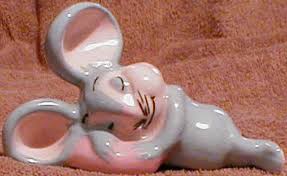
A mother hen leaves her eggs. Not smart. They are being watched by a hungry weasel. He sneaks up to feast, when the chicks hatch and nearly give him a heart attack. In the nearby forest, there are lots more animals to have fun with. (You didn’t think we’d stay on the farm for all of our frolics did you?) There we see a field mouse with abnormally large ears, who keeps hearing things. Believe it or not, he has a name. His name is Rosebud. And even though he only appeared in one other short besides this one, we got some merchandise of him.

Let sleeping statues lie.

Even though they are small, even ants care for their young by calling them home. For the sake of not boring you, I will refrain from pointing out all the misleading ant facts that are shown here. Except for the ant butt crack. (What is up with that?) As we head back to the farm, we see the pigs still at the clock. They refuse to go play. I guess that clock is more entertaining than we will ever know.

A more bizarre sight is that of a cat and a mouse in a loving embrace. Apparently the cat loves that mouse and takes good care of him. This doesn’t stop the mouse from begging for help and trying to escape. The cat catches him and happily goes back to sleep. Before the day is over though, we stop by the piglets one more time. Seems they were watching the clock to know when it was their favorite time of day: Dinnertime. They happily run home to their mother’s teat and began suckling. (“Every day it’s the same thing.”)

Personal Rating: 3

Crazy Cruise

“Monotonous, isn’t it?”

Supervision uncredited; begun by Fred Avery, completed by Robert Clampett; Story by Michael Maltese; Animation by Rod Scribner. Musical Direction by Carl W. Stalling. Released in 1942.

You know, Clampett is still my favorite director, but I find more and more lately that I wish Avery never was fired. It would have been great if he had stayed on the Warner’s team the whole time. Who knows? Maybe he would have gone on to still create Droopy, Screwy Squirrel, and Red?

This short contains a bunch of spot gags that Avery had a real talent at. We see a tobacco plantation and take a peek at an animal that does untold amounts of damage to the plants: the tobacco bug. (Which looks more like a species of worm to me.) It talks like an auctioneer and spits. Our cruise then heads to Havana and Sloppy Joe’s bar for some refreshments. After getting “tanked up” we head for out next destination in the most direct route possible. (When you’re as drunk as that, spiraling IS the most direct you can be.)

During this time of war, our ships are camouflaged so well, that all you can see are the sailors, flags and smoke. After stopping by the Swiss Alps (Where our plane slides over the mountains.) and an oil derrick, (Where we have our second spitting tobacco joke.) we come to an African Jungle. We see a species of carnivorous plant: the Eatemus abuggus. Or as it’s known in English: the Carnivore Flower. It tries to make a meal out of the bee that flies into its “mouth”, but it is stung. A line of animals wait for a turn to drink at a water hole. (Wait, why is there a pronghorn in Africa?) You might be wondering why the elephant is being so patient, as in the wild they tend to use their size to bully their way in first. Why, it’s because a zebra mother is helping her young to take a drink from the fountain. Isn’t that precious? (What? You thought it was going to be a lake? You clearly are new to these shorts.)

Past Veronica Lake (which is shaped like Veronica Lake) is a land of giant cannibals. Two hunters and their racially insensitive guide are heading that way to try and capture some. (I think that freckled one is supposed to be a caricature of Friz Freleng.) Their guide (who only speaks in scat singing) is excited to show they were captured. (Was he a spy? Or is he happy because he escaped?) The cannibals are so giant, that the hunters are nothing but mere candy bars to them.

Next we see some baby rabbits. Awwwww! (My favorite one is the one whose back is turned to us.) But they have been spotted by a Japanese vulture. (Also depicted in an unflattering way, just because he’s from another country doesn’t make him any less of a bird.) The rabbits respond with an anti-aircraft gun. The one whose back was turned turns around and… Hey! That’s no baby bunny! It’s Bugs Bunny! Before the short ends, his ears make a victory V. (Sad to say, there are no victors in war. Only losers.)

Personal Rating: 3

A Gander at Mother Goose

“Remember Little Hiawatha and his bow and arrow?”

They’re just a bunch of foney’s.

Supervision by Fred Avery; Story by Dave Monahan; Animation by Charles McKimson; Musical Direction by Carl W. Stalling. Technical Advisor; Mother Goose. Released in 1940.

Sing a song of 10 cents, A.K.A. a dime. I felt it best to make another post, entirely in rhyme. Nursery rhymes are what our featured short is all about. So let’s not waste any more time, and just go check it out.

Mistress Mary, quite contrary, how does her garden grow? Not so well is what methinks. “Confidentially, it stinks.”

Humpty Dumpty sits on a wall, and soon poor Humpty takes a great fall. But he lands just fine; sees no drawback. (Unaware that we can see his “crack”.)

Jack and Jill climb a up hill to fill their little pail. Jack should now come falling down, but not this version’s tale. “To heck with the water” he doth speak, with lipstick markings on his cheek.

Miss Muffet sits on her tuffet, eating curds and whey, when a spider comes down beside her, to frighten the girl away. (Why does he have three legs on each of his spidery limbs?) But Muffet’s just so ugly that it’s she that frightens him.

The three little pigs are all on the run. (They could be Porky’s nephews, but he already has one.) They hide in a brick house, away from the wolf’s hungry jaws, (Yes, this isn’t a nursery rhyme. That’s the short’s biggest flaw.) They surrender to the lupine who’s wishing their death. But only because he’s got terrible breath. They offer him mouthwash. (That’s got to sting) He takes it. “Why don’t my friends tell me these things?”

Star of light, star so bright, a dog wishes on a star at night. His wish comes true. What could it be? Well he IS a dog. He wished for a tree.

Jack is nimble and Jack is quick, he jumps over a candlestick. It’s basically the same as the Humpty joke, just with burning butt rather than yolk.

There is an old lady who lives in a shoe, she has so many children, what can she do? She does have a husband, but he’s not there. He’s off relaxing in a lawn chair.

Finally, “‘Twas the night before Christmas, and all through the house, not a creature was stirring,” except for a mouse. “Merry Christmas” he whispers to his mouse friend, “QUIET!” he shouts. And thus the short ends.

Personal Rating: 3