Directed by Friz Freleng; Story by Warren Foster; Animation by Virgil Ross, Art Davis, and Gerry Chiniquy; Layouts by Hawley Pratt; Backgrounds by Irv Wyner; Film Editor: Treg Brown; Voice Characterization by Mel Blanc; Musical Direction by Milt Franklyn. A Merrie Melody released on June 23, 1956.
Would you look at that! Granny actually got her name in the title! But… it’s only so they could make a “Tuboat Annie” pun, so she won’t be featuring much in the following short. All we get out of her is a duet with Tweety about tugboats. Granny has a tugboat, you see. I don’t think I’ve made that quite clear. As for Sylvester, he’s been trying to snag a meal by hanging around the fishermen. Since that’s not working out, he decides to try and board the boat and bag the bird.
He first tries a rowboat. Tweety drops an anchor, causing the cat to have to row back to shore, sans boat. Next, he tries a rubber raft. They’re impervious to anchors, but not darts, and it just so happens that Tweety has one of those on him. (Weird. The shot of his dart hitting the raft contains no water. It makes the raft appear to levitate.) Well, the tug is making its way under a bridge now, so Sylvester tries to simply drop down. He lands in the smokestack. (Which would be impressive if this was a video game. It’d probably earn you a piece of heart.)
Right. Going on the water didn’t work. Going over the water didn’t work. Since there aren’t any sharks in this cartoon, it looks like it’s time to try going under and through the water. Sylvester makes a pipe into a handy metal snorkel, but that is exactly the kind of perch that attracts penguin-gulls. And it is insistent on staying put. Since Sylvester has no gills, he has to return to shore. Only then does he find that the bird laid an egg, which is now in his mouth. He throws it at the pest, but gravity returns it to him.
That’s enough tugging for today. Granny (Still not on screen, mind you.) starts docking. Sylvester readies a lasso, but it flies too far, and grabs a hold of a passing speedboat, pulling Sylvester in tow. He starts to get into the spirit of things, and starts pulling faces and stunts. When one doesn’t look where one is going, one is liable to crash into a post. Quoth the fish: “I tawt I taw a puddy-tat.”
Favorite Part: Sylvester’s disastrous fishing trip. Hearing somebody got a bite, he hides in their tackle box. The catch that is put in with him, is a very angry crab. The natural enemy of the common house cat.
“Some Road Runners have been clocked at 50 miles…”
Directed by Rudy Larriva; Story by Rudy Larriva; Animation by Hank Smith, Virgil Ross, and Bob Bransford; Layouts by Erni Nordli; Backgrounds by Anthony Rizzo; Film Editor: Lee Gunther. Musical Direction by Bill Lava. A Merrie Melody released on September 18, 1965.
Wile E. is not chasing the Roadrunner at the onset of this short, he’s just observing. And giving the most lifeless lick of the chops I’ve ever seen. His tongue is the only part that moves. Didn’t even blink. And then he’s chasing all of the sudden. The Roadrunner must be slowing down in his old age, for Wile E. is able to grab a hold of him! (!!!) But the bird manages to shake him loose on a sharp turn, leaving the coyote’s paws full of naught but tail feathers. (Pretty, but not very filling.)
Wile E. flaps those feathers hard, until he’s both tired AND feathered. And he flaps them for a full 5 SECONDS before he starts to fall. They really had to stretch the shot that long. The background even; it’s just an empty sky. No clouds! No distant cliffs to suggest he’s still in the desert! To think I used to defend this decade in Looney Tunes history! (Which I still do, just nowhere near as vehemently.)
Later on, Wile E. reads a book that doesn’t really tell him anything he doesn’t already know. (And as my quote of the day suggests, couldn’t even spell ‘roadrunner’ correctly.) This somehow encourages him to strap a propeller and motor to his back while he wears skates. His tail gets caught in the blades, and he leaps into the air making a noise of pain. Even more lifeless than his licking! He’s just a still image moving across the cel! At least they bothered to put some clouds in. (Yes, I’m aware they’re simulating his movement up. But it’s still nicer to look at since we get his still pose for three. Full. Seconds. Did you know that tedium ISN’T inherently funny?)
I guess Wile E. has given up now, seeing as how he’s not doing anything but imagining roast poultry. He’s not pacing, or reading, or any other way to suggest he’s still thinking up schemes. Then a phone rings. It’s the Roadrunner taunting him. (Rude.) This does give Wile E. an idea. First he disguises some TNT for the phone’s receiver and we then get a panning shot to show it’s attached to a detonator. A panning shot that is NINE! @%$#ING! SECONDS!
GOOD! LORD!
Calm… Calm… So the trap isn’t finished yet. In fact, it requires a brief building montage. (*sigh* Did Chuck ever need something like that? I miss the days where we got a few shots of Wile E.’s “ingredients” before just seeing the final project.) He’s built a phony building facade around the explosive phone, cut the wires, (so… nobody can call?) and labels it as a bird sanctuary. Then he makes a billboard to advertise it, saying it gives birds a safe place that is free of things that want to kill them directly, and free phones. (No Wi-Fi.)
The Roadrunner takes note of the sign, but Wile E. hears a phone ring. But how? He cut the wires! (Was that really why we saw him do that? To set up for this obvious punchline?) Wile E. gives in and goes to answer the phone. He blows up because the Roadrunner stands on the detonator to reach the bird seed Wile E. had behind him for no given reason. And what of the ringing? Was that the Roadrunner? I don’t care. It’s over.
Favorite Part: Hard to choose. There really wasn’t much to spark joy. I choose Wile E. actually laying a paw on his prey. The Roadrunner’s shocked expression is slightly funny.
Personal Rating: 1. Yeah, this is the worst Wile E. short I’ve discussed. I hope that is never up for debate.
Supervision by Ben Hardaway and Cal Dalton; Story by Jack Miller; Animation by Rod Scribner; Musical Direction by Carl W. Stalling. A Merrie Melody released on November 18, 1939.
You remember the rhyme about the three little kittens who lost their mittens? I was never a fan. Even when you don’t take my feelings towards felines into account, I always found the tune annoying, the lyrics inane, and the plot just depressing. So, this cartoon doesn’t get to a good start with me, since it starts with that precise rhyme.
A mother cat and her kittens are singing, and smiling, and just making the world that much more saccharine. I’m with the kitten sulking in the corner, Alphonse. (He says the kids call him “Blackie” but I come from a millennium where that sounds a bit derogatory. I’m not one to judge kids by the color of their coat.) Now, the radio programs that feature guns, and violence, and death? That’s more his style!
His mother is angry about this. So much so that he’s getting the ole “bed and no dinner” punishment. Pretty harsh. Sure, he interrupted her inoffensively offensive sing-along, and yes, it’s probably not great that he is so fascinated by shooting, but to deny him his meals because of that? That’s poor parenting. Hasn’t she ever tried simply turning the radio off, looking her kid in the eye, and just spanking him?
Well, as long as Alphonse is in his bed, he might as well sleep. And if he’s asleep, he might as well dream. And if he’s dreaming, he might as well dream about something related to this whole thing. So, in his dream, he spots a sign asking for boys. It doesn’t really go into any further detail, so I don’t fault the kid for knocking on the door. He’s greeted by an older cat named Fagin. He seems like a kind enough gentleman, he’s running a school, and everyone knows those are always on the up and level.
Alphonse is introduced to the other classmates, and even though they permanently scowl, they seem chipper enough. But Alphonse isn’t too keen on hearing he just agreed to go to school. But Fagin makes a good point about how education gets you farther in life. (You think I WANT to write a blog that nobody reads?) Why just look at the students that he’s tutored. (I’m a little disturbed that one sometimes goes by “Holocaust Harry.” Wh…Why would that be an alias of his?)
Alphonse is starting to get worried, but Fagin makes a good point about how he just teaches. It’s the pupils who decide what they will do with their education. And yet, the cops just don’t see things that way and knock at the door. The police (who in this dream are all dogs) are doing their best to get inside. And they’re willing to use their firearms too. Either they don’t know their are kits in there, or said kits knew what they were getting into when they signed up.
Now that Alphonse is witnessing all this firsthand, he breaks down. He’s scared, and wants out of this lifestyle. But since he’s still asleep, he’d better find something he can get tangled up in, so they can become covers upon his awakening. Falling out the window, and getting wrapped in the curtains counts. He wakes. And now that he knows that being shot at is no fun, he joins in his families singing.
Favorite part: During the shootout, Fagin asks for everyone to cease while he answers the phone. They comply, and after answering, Fagin relays the message to officer Hogan. His wife needs butter.
Personal Rating: 2. But it teeters on the edge of one.
Supervision by Jack King; Animation by Bob McKimson and Paul Smith; Music by Norman Spencer. A Looney Tune released on June 22, 1935.
Despite what the title says, we see Buddy chasing a butterfly. Which may be an insect, but is not a true bug. But fine. For today I’ll do like the common man do, and use “bug” as a catch all term for insects. (Makes me feel dirty.) Anyway, Buddy really wants this butterfly. I don’t know, maybe he’ll get a golden net if he catches it.
Rookie mistake on the butterfly’s part! In its attempt to escape, it flew right into the very place the bravest arthropods hesitate to enter: Buddy’s Bug Hun- House. Buddy gets his prize and adds it to his already extensive collection. (Buddy also sounds like a little kid in this short. A fact that makes his action’s a bit more innocent.) Along came a spider, that Buddy does spy, he grabs hold of the arachnid, it’s going to die.
Wait…. arachnids aren’t bugs either! They’re not even insects! Cheat number two for you, Buddy m’lad. But yeah, he has every intention of killing this animal. How else would a “bug” collector collect? ( Considering this spider has six legs, it’s clearly some undiscovered species. Or maybe it’s a beetle using mimicry to avoid predators?) Buddy glues the poor thing down to keep it still, and readies the ether. Yes, he has ether.
And he’s not too careful with the stuff, ether. It starts affecting Buddy, making him woozy, and dizzy and apt to getting knocked out. And down he goes. During this time, the spider has managed to get itself free and sees the threat is no more. In fact, the threat looks like it could be at its prisoner’s mercy. No time wasted, the spider sets about freeing the other animals Buddy has imprisoned. Including a…frog. Strike three! That’s not even an invertebrate!
Buddy learns how Gulliver felt, when he wakes up to find himself ensnared in a spider’s web. They could just eat him, he’d probably be enough of a feast for seven generations of spiders, but spiders don’t kill for revenge. They’re going to put Buddy on trial first. Just got to bring him down to their size. They force feed him some reducing pills, and Buddy the terror has become Buddy the peanut. (What really makes this terrifying is the glee on the animal’s faces. No malicious smiles here; it’s pure cheer.)
And so Buddy is put on trial for his animal cruelty. Previous offenses include: ripping off a grasshopper’s leg, killing a butterfly’s parents, and making a widow out of…I guess another spider? She has even less legs than the others and has antennae to boot! But what else could they use for a black widow joke? Scarlett Johansson wouldn’t even be a sperm for another forty-nine years.
Buddy’s found guilty and is sentenced to what passes as the electric chair at this scale: a cigarette lighter. (Ironically, this is exactly how the majority of people who know about Buddy, wanted to see him go.) But it was all a dream of course, and the pain on Buddy’s backside is due to sunlight shining through a magnifying glass. Naturally, Buddy sets everyone free. Just in time, as the clubhouse collapses. (Which is the second most wanted way of Buddy’s demise.)
Favorite Part: How the judge reacts to the butterfly’s testimony. His “Ooh, is that so?” Just sounds so sarcastic. “Really? That’s really the extent of your misery? That other guy lost a freakin’ leg! It’s never going to grow back! And you have no parents? You, a butterfly, an animal whose parents never even witness their eggs hatch, blames this monster for your lack of a mom and dad? Well, I guess we have to give him the chair now!” (That’s all subtext, you understand.)
Personal Rating: If you’re like me and love the kind of stories where someone gets put in the place of some animal they’re harming in some way, then I think it’s 3 worthy. Otherwise, it’s stuck at 2.
Directed by Robert McKimson; Story by Tedd Pierce; Animation by Phil DeLara, Charles McKimson, Herman Cohen, and Rod Scribner; Layouts by Robert Givens; Backgrounds by Richard H. Thomas; Voice Characterization by Mel Blanc; Musical Direction by Carl W. Stalling. A Merrie Melody released on November 28, 1953.
Sylvester doesn’t mind being an alley cat. He can go where he likes, do as he pleases, and it really makes one appreciate your meals. His son, on the other paw, is not pleased. He wants a home! Where humans will feed him, pet him, and possibly find him cute. The main reason Sylvester is against all that, is the work that it will entail. “Meowing” for food? How civilized.
While at a wharf and searching for breakfast, Junior sees a wanted sign for cats to catch mice on a ship. It’s close enough to his wish for him! And if his dad needs help, he’ll help him! Sylvester thinks that maybe, this could work out after all. He agrees and they get the jobs. Or job, rather. Sylvester sees this as a an opportunity to take a cruise.
When Junior calls him out on his slothful behavior, Sylvester makes a deal: since his son is small, he can catch small mice. Since Sylvester is large, he’ll catch any big mice. You know, should any happen to be around. Poor little guy. He can’t bear to refuse his old man, so he resumes his chase into the cargo hold. The mouse he was chasing has hidden in a baby kangaroo’s crate.
Junior has a neat “Jurassic Park” moment with the marsupial, a good 47 years earlier than the novel. He runs to his dad, telling of the giant mouse, and per their arrangement, his job of capturing it. Sylvester humors the little guy, but finds he is telling the truth. Still, he tries to honor the deal, and sets about trying to fight the beast. It goes about as well as the previous 5 cartoons they’ve been in.
Sylvester makes a new deal with his kid: see, it’s unfair for a child to do more work than the parent, so, since there is only one big mouse, and plenty of small ones, Sylvester suggests they trade. (Geeze, Sylvester is a horrible parent.) But since Junior is such a good son, he agrees to his father’s demands once more and prepares to fight. Junior is quite quick to realize that this is all a game to Hippety, and what’s more, he’s copying all of the cat’s actions. With this knowledge, Junior is able to get him back into his crate quite easily.
Sylvester went back to his reading, because I guess he figured this would keep Junior out of his fur. But once Junior reminds him of their deal, he actually honors the deal! (He is a good father after all!) He follows a mouse back into the hold, and tells his son to not open the door. No matter what he says. The mouse (Who has a shock of red hair on his head. Huh.) hides in a crate of vitamins. And they work wonders! (Must be from ACME.)
With the upper paw, the mouse begins to pummel Sylvester, all while the cat calls desperately for Junior to let him out. Unlike how this gag usually goes, I think Junior is quite aware that his dad is in real peril. But he’s earned the right to benefit from this, and honors his father’s last request.
Favorite Part: The fact that Sylvester didn’t try weaseling out of the deal again. He’s not happy, but it takes very little provoking to get him to do his job this time.
Supervision by Robert Clampett; Animation by I. Ellis; Story by Warren Foster; Musical Direction by Carl W. Stalling. A Looney Tune released on January 6, 1940.
That’s the name of the lunch wagon Porky runs. Daffy works there too, but he’s got those rings around his eyesagain. When he loses those, then we can talk about privileges. In the meantime, it’s opening time. Time to cook food, and wash dishes. Because there are customers, and they are hungry. One of these types is placing his order to Daffy. He wants “a good hamburger, and he wants it bad!” I know how to make those!
The secret is to step ON the ingredients.
Of course, to make a good hamburger that’s bad, you kinda, sorta, need some ground beef. And Daffy’s stock has been gobbled up by mice.
Porky, meanwhile, has a customer of his own to take care of. This one wants coffee and eggs. The first part of that order is no problem. And the second part should be easy too. Porky grabs a couple of eggs, (Tiny, aren’t they? Was there a quail under that chicken?) and sets to frying. But since we clearly saw a rooster at the beginning of this picture, it’s not too surprising to find that one of the eggs was fertile.
What a way to begin one’s life! Not only do his feet hurt, but he clips behind the frying egg! Whoops. Better get rid of that thing before Leon sees it. Next shot: no egg! And you don’t need to worry about the chick either. He heads back to his mother, and the “Do Not Disturb” sign he puts up should keep similar mishaps from happening. Now, how is Daffy doing with that g.h.t.b. order?
Well, there is certainly no more beef in the wagon. but there is a calf outside! Veal makes tasty burgers, right? (I’m legitimately asking. I’m curious enough to ask, but not enough to look it up myself.) Well, natural selection dictates that the customer is always right. Daffy picks up a mallet and follows the young ungulate (or “youngulate.” Feel free to spread that around.) Back to the barn. Fade to… I don’t know, half a second later, and Daffy tries pulling out his future sandwich. (So, did he actually try using that mallet at all?)
Seems like a bit of a mix-up occurred, as Daffy has grabbed a full grown bull. (Unless that fade was actually suggesting two years, and Daffy was just waiting to get the most of his meat. A brilliant theory! I’m a genius.) I also like how Daffy uses the old “It’ll hurt me more than you line.” Because, I think he really means it. Business is business, and sometimes we have to do things we don’t want to for our employers’/customers’ benefit. (Like how I want to punch certain people, but instead pretend to be interested in what they say.)
The bull gives chase, but Daffy makes it back to the wagon, shutting the door as well. (Well built, too. I was sure that bull would have torn through it like damp tissue.) His frantic ramblings lead Porky to believe there’s a salesman of some sort at the door. (Great shot of the bull charging towards him.) Porky slams it just in time, so the bull has no choice but to get a running start and ram with all he’s got. The cart is quite sturdy too, as it barely moves as the bull tears right through it. Like… some sort of… wet… Kleenex?
Porky has to run, now that he’s outside his sanctuary with an angry porterhouse on his tail. Daffy manages to get its attention with a cape, and the bovine changes course. Daffy bolts at the last moment, Porky (who got behind the cape somehow) digs. (And breaks his neck if you look closely enough.) And the bull ends up crashing into the wagon. It finally goes down. (I guess that was the last stand’s last stand.)
Not to worry though, the chickens all survived. And they decide to celebrate by becoming a carousel. A wagon wheel as the base, the hens as the mounts, and the chicks as riders. The bull’s nose ring plays the part of the ring you try to grab. (Do those still exist? I’ve only ever seen them in cartoons.) Maybe the bull is still alive after all. I mean, only a living animal could regenerate rings at such a rate.
Favorite Part: Daffy coming to the rescue. Porky didn’t even call for any assistance. So that means Daffy truly cares!
Personal Rating: 3 Well done action, medium rare jokes.
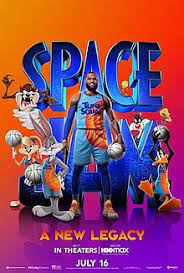
As the title suggests, these are just my first thoughts about this film. A synopsis, complete with annoying jokes, limited information, and inflations to my own ego will happen someday in the future. Not today, for it is the present.
Very short version of this post: 🙂
Long version of this post: I expected this movie to be fun. Not good, bad, great, or abysmal. Just fun. And I got exactly that. Let’s be real. Even the first S.J. wasn’t really all that great. (Something I’ve come to grips with long since I blogged about it.) Neither of them have a great story, these films are just an excuse to have cartoons play basketball. (And sell W.B. merchandise on the side.)
Speaking of weak story, I won’t lie: this film has got one of those. LeBron is just playing the “father who wants his progeny to be like him, despite the kid’s protests to do something else.” Seen it. And yeah, the man isn’t a superb actor. (At least he is able to admit it in the film.) Still, I feel he does better than Jordan did. He definitely emotes more. As opposed to Michael looking dead inside. (Really. How could you not go “Looney” getting to meet animation’s greatest characters?)
But as week as the story is, (and some might disagree with me on this) it’s leagues better than the first one’s. Having the Tunes exist in a digital world makes much more sense than being underground. And for that matter, LeBron’s actor/son’s conflict actually gets some sort of payoff. Unlike Michael’s actor/son who mopes a bit, cheers up upon finding his dad was kidnapped by animated characters, then disappears until the denouement.
And the crossover aspect! If you can fathom the idea of someone never seeing “Ready player one” or any “Avengers” movie, then you can probably believe me when I say I was getting goosebumps when all of Warner’s properties gather to watch the game. But there’s a downside to that too. After they assemble, they don’t do anything. Yes, they’re the audience, but the original film let its audience react a bit more. (The most we get here is a pout from King Kong.)
For that matter, the original utilized the Tunes universe just a bit better. The team you see in all the advertisements? That’s pretty much all we get. Marvin and K-9 get a little screen time, when everyone sans Bugs is coerced into seeing what other worlds they can explore there’s a group shot of many minor characters. It just goes by so fast one can’t enjoy it. (I was able to see Rocky, Muggsy and Playboy.) And Canasta appears in the “Mad Max” universe. That’s it.
Wasted potential there. Why couldn’t they join the rest of the crowd for watching?Too expensive to animate? Which reminds me, the animation was gorgeous. Not spectacular. There’s nothing on the levels of “Fantasia” or “Spirited Away.” But what we get is a real treat. Vibrant, bouncy, and looney. Just what I expected and wanted. But that’s the 2-d stuff. How was the 3-d?
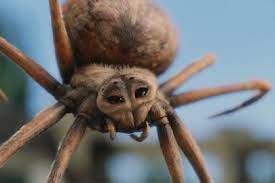
I won’t lie. It looks good. And that’s a relief considering how computer generated animation trying to look like it really exists ranges from nightmare inducing:
“I’m the reason animated spider’s are drawn with simple mouths!”
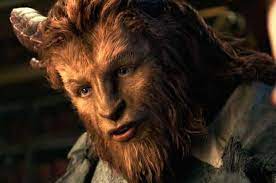
To laughably pathetic.
“Did I miss the auditions for “Pan’s Labyrinth”?”
The voice acting was nice as well. Zendaya Maree Stoerme Coleman did pretty good as Lola. Heck, if I didn’t know going in, I would’ve figured Ms. Bunny was being voiced by a 25 years older Kath Soucie. And the basketball stars voicing the villains did an admirable job. And mentioning the villains, I thought they were a lot of fun. Even if super-powered mutant basketball players feels strangely familiar.
“Good news, everyone! The public no longer has to remember us via “Pixels!”
It’s a good thing they were a joy to watch, as they don’t get nearly as much screen time as the Monstars. And one of them appears too late, and disappears too fast. Why wasn’t he there from the start? Oh, and while I’m discussing the villains: I found Don Cheadle entertaining, but not Pete. He did nothing to further the story. Completely superfluous. But the Minions have made it so animated films won’t sell if there isn’t at least one tiny, annoying, comic relief character that wouldn’t be missed if cut out completely.
The weakest part of the film in my opinion? The ending. I won’t spoil it here, but it didn’t make a whole lot of sense to me, and seemed to wrap up a bit too fast. Lucky for me the fun stuff starts a lot quicker than its predecessor, so I don’t feel like there was a bunch of wasted time squeezing the entertaining middle.
And that pretty much wraps up my first thoughts after my first viewing of the first “Looney Tunes” film I’ve been able to see in theaters. My rating is just a few more lines down.
Short version of this post: I quite enjoyed it.
Favorite Part: Really, I did get chills seeing such a large crossover of properties. It might change in the future, but it’s the winner for now.
Personal Rating: I’ve been seeing fairly negative reviews from other people. I however, feel that if you go in expecting to see a movie that is more “fun than substance,” you’ll have a good time. (It’s the film equivalent of a lollipop.) Therefore, I grant it a 3 for the basic crowd, and a 4 for my fellow Looney-tics. (Yes, really.)
Directed by Chuck Jones; Story by Michael Maltese; Animation by Richard Thompson, Ken Harris, Ben Washam, and Keith Darling; Layouts by Maurice Noble; Backgrounds by Philip DeGuard; Film Editor: Treg Brown; Voice Characterization by Mel Blanc; Musical Direction by Milt Franklyn. A Looney Tune released on April 23, 1960.
Before I begin with that:
I have seen the face of God.
And now for today’s regularly featured proram.
Summer is that magical time of year where weather is nice, so people take advantage of the blissful warmth by traveling. Penelope may be a pussycat, but she has yearns to see the world via cruise ship. (Cats love the ocean. Every time I’ve ever thrown one in, I never saw it leave.) The guy who takes the tickets is French, so he greets people in the traditional french way: guys get it on the cheek, girls get it on the lips.
Since Penelope is a pussycat, and doesn’t have a ticket, she is not allowed on board. She is left behind with the transparent luggage. (Sure, it sounds cool now, but it gets embarrassing once you realize people can see all the condoms and tanning oil you have in there.) Still, a cruise is one of those once in a lifetime things for most, and she won’t be deterred. All she has to do is slip under the fence. Sure, it’s got a bit of wet, white paint on it, but it’s a pretty small obstacle all things considered.
Success. Using her amazing claws, she grabs a hold of a rope and goes along for the ride. But wouldn’t you know it, France is the homeland of Pepe Le Pew! He waves the ship off, but notices something dangling from a rope. It’s black, and white, and female all over. Sounds like a skunk to him. And he’s not about to let a little water and his lack of swimming get in the way. As for his object of desire, she clambers onto the deck.
Now, you and I know that Penelope is a pussycat, but with that white paint on her back, she looks an awful lot like a skunk. So much so, that every human on the boat would rather abandon ship than face it head on. (The sharks love it when this happens.) As for Penelope she has found herself in the arms of one very smitten skunk. A wet one, so the stench must be worse than usual. She bolts, but Pepe takes his time before pursuit. He’s got to dry off first. (Shame. I think his hair looks good that way.)
A trip to the salon is just the ticket. (Pepe looks kinda cute all fluffed up. Why is that not a plush toy?) Once back to his normal self, he resumes his chase. The ole “chaser is always where chasee” is hiding routine. It’s pretty basic stuff, even for this formula. Looks like Penelope has changed her mind about her cruise today, so she opts for the lifeboat. Once safely onboard, she watches the troublesome ocean liner head for over the horizon. This is the moment when Pepe reveals that they’re all in the same boat. It’s a little story I’m calling: “Life of cry.”
Favorite Part: The ad for the ship Penelope reads at the beginning. It’s the “Fun?” that makes me chuckle.
Rating: 2. It starts with some good jokes, but things get kinda boring once the two animals make it on to the ship. Perhaps the formula was finally getting stale.
I think I’ll take the next week off. No real reason, I just need to take a look at myself. Reexamine my life. Ask if I’m happy. I don’t plan on quitting yet. If I was, I’d tell whoever actually reads this. Expect me on the 18th. I’ll tell you what I thought of the latest “Space Jam.”
Directed by I. Freleng; Story by Warren Foster; Animation by Arthur Davis, Manuel Perez, Ken Champin, and Virgil Ross; Layouts by Hawley Pratt; Backgrounds by Irv Wyner; Voice Characterization by Mel Blanc; Musical Direction by Carl W. Stalling. A Looney Tune released on May 8, 1954.
Hey, it’s Spike and Chester! Haven’t spoke about either of them since 2014. Oh, wait. I won’t be mentioning Spike after all. His name is Alf now. Because it’s a more appropriate name for a cockney dog, don’t you know? Oh, yes. The two have some nice thick accents this time around. Makes sense; this short’s source material does take place in London.
“Alf” and Chester, (making their final appearances) are out having a jolly stroll. At least, that’s what “Alf” wants and Chester believes. See, Chester looks up to “Alf” as some sort of hero. He’s bigger, meaner, and has people clothes. The kind of dog we’d all like to be. But “Alf” is also a bit of a bully. Smacking the little guy around, demanding he leave, and turning down his suggestions of fun. Chester then plays his trump card. Maybe “Alf” would like to beat up a cat?
That’s the ticket. “Alf” is always up for a good feline thrashing, and the two give chase to Sylvester. Poor cat takes refuge in a building that belongs to a Mr. Hyde and a Dr. Jerkyl. (And I’m sure at least one of you was planning to tell me I made a typo in the title.) Breathless due to all the exercise, Sylvester is more than happy to take a swig of what he believes to be soda. (Honestly, can YOU name another liquid with carbonation? Because I can’t. Please help.) But that wasn’t pop.
This stuff, whatever this stuff is, is designed to turn the drinker into a much meaner, much tougher, much scarier version of thyself. So Sylvester grows a couple feet, his eyeteeth grow out, and he gets a murderous look in his eyes. It is then that “Alf” comes in for a pummel. He leaves, white as a ghost. (I like how his shirt changed color, but his hat didn’t.) That stuff only lasts so long though, and Sylvester is back to his normal self when Chester takes a peek at this “scary monster.”
Well, that don’t make any sense to the spaniel. I mean, the cat is actually quite small. Chester could pound him, himself. And logic dictates that if a small dog could do it, a big dog could do it, but easier. Chester drags “Alf” back in, just as they witness their prey escape into another room. Yeah, he looks timid, terrified, and totally weak. “Alf” regains his confidence, and follows after him. (Chester doesn’t follow, for the sake of the joke.)
“Alf” corners the cat in a box, where we see the formula kicks in sporadically. Now powered up again, Sylvester gleefully plots out how we will carve the dog. “Alf” returns to Chester, but falls to pieces. (Probably a good contender for the most violent massacre in all Looney Tunes, and there’s not one drop of blood.) The power wears off again before Sylvester can take on Chester, and the dog proves good of his claim to beat the cat. Now more convinced than ever, he traps “Alf” in the building for his own good.
Sylvester takes this time to flee. (I really can’t tell if he is aware of his transformation or not. Maybe if I read the original “Jeckyll” story, I’d know.) “Alf” sees this and also sees an opportunity to seize. He uses the beakers around him to simulate a fight that he is winning. But one of the beakers he throws was full of more formula, and the stuff lands on a housefly. (And I guess it drinks it. Unless the stuff can be taken topically.) It does its thing, and the fly’s size increases, as does its temper.
Now, the insect is only roughly the size of a hummingbird, but insects ARE immensely strong for their size, and it has no trouble roughing “Alf” up and throwing him out. “Alf” begs for Chester’s protection before the two witness the fly slamming the door in their faces. A big fly, yes, but a fly nonetheless. And thus, the last amount of respect Chester might have had for the big dog is dead. As such, the roles reverse: Chester wears the hat in this relationship now, and he slaps the now hero-worshippy “Alf” around.
Kind of a shame these two had such short careers, but seeing as how this is very similar to their earlier work, there probably just wasn’t enough material to make multiple cartoons.
Favorite Part: How Chester gets “Alf” back into the building: marching him in at gunpoint.
Supervision by Jack King; Animation by Frank Tipper and Ben Clopton; Music by Norman Spencer. A Looney Tune released on December 12, 1934.
Buddy sings as he walks. And he walks wherever he wants. In and out of doors, up steps, and onto railings. Of course, this doesn’t bother anyone since no one seems to be around. Nearly ever other in this cartoon is hanging out at the famed “Cantina El Moocher.” The best place for a nap. Not because any and all happenings there are boring, but rather, it’s just that were in Mexico, where everyone sleeps. Stereotyping is fun! (Although it really shouldn’t be. Ask someone to punish you if you continue to do so in spite of my warnings.)
Well, Buddy, you’ve still got a bit of time before Warners washes any traces of you they can find off the Earth, how will you entertain with a bunch of laze-abouts? Oh, you’ll just pop a coin in the piano player’s mouth and things will get jiving? Why didn’t I think of that. Now that we’ve got some more music playing, we can hear our slightly offensive song. (Having never been to Mexico, I can only assume that they don’t add an “a” suffix to most of their words.)
And now the villain. Or at least some oafy thug who will cause trouble. Everyone knows him as Pancho, and they are wary of him too. It’s a good plan, as this guy fires his gun with reckless abandon. Sure, we don’t see anybody get hurt, but guns aren’t toys! He could put somebodies eyeteeth out. But all he winds up doing is shooting Buddy’s banana. That’s done it. If Buddy can’t enjoy his banana, then Pancho can! Buddy squeezes it in the big guy’s face, and as punishment, Buddy must now play the piano. (Poor guy.)
The music summons forth a dancer, who while not stated to be Cookie, will be treated as such. Pancho likes what he sees, and tries flirting, but she really isn’t interested. (Why aren’t the decent girls ever interested?) Pancho doesn’t care, and threatens to marry her tonight. Either the girl really IS Cookie, or it’s just the chivalrous thing to do, but Buddy uses a cello (maybe?) to shoot a fork at “That big bozo!” (Cookie lets you kiss her with that mouth?) Okay, Pancho vs. Buddy. While I think it’d make for a nice change a pace to got a different direction, my money is still on Buddy.
And my master gambling skills pay off once again. Shrugging off Pancho’s threat to “kill you to little pieces.”, he fires a candelabra (maybe?) which plugs up the scoundrels guns. Last option: the whip! Pancho gets Buddy (color changing string instrument!) leaving Buddy with little more than his puny fists to fight with. So Pancho starts swinging him around by his ankles. (I’m not worried. Be prepared to pony up.) Buddy grabs hold of a chandelier, and the both of them are soon spinning.
Once the chandelier has spun all it can, it spins the other way, throwing the two into a table. And what does Pancho have to say about all that? He was only kidding, of course! *eye-roll*
Favorite Part: During Buddy’s amble, he steps off a balcony and onto a stack of hats on a man’s head, stretching the top one over the rest. Buddy’s fixes things by giving the man a kick in the rear. Funny, because it’s such an un-Buddy thing to do.
Personal Score: 2. The stereotyping and weak ending keep it from scoring the coveted 3. This is still one of the better Buddy cartoons. You know, if you really need one.