We’re in the Money

“♪We’ve got a lot of what it takes to get along!♪”

Animation by Isadore Freleng and Larry Martin; Music by Frank Marsales. A Merrie Melody released on August, 26 1933.

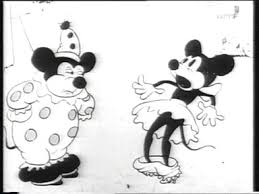
It’s night, it’s late, and it’s time to close up the department store. With all humans now vacated from the premises, the merchandise can come to life. Well, they could do that during the day too, but it’d be really awkward. (Either asking to be bought and being refused, or certain products not being aware of their purpose until its too late. I’ll leave it at that, use YOUR imagination for once)

They toys start up some music. You’d think it would be hard to play instruments several sizes larger than you are, but they make it work. Although some of the instruments require more than one of them to play, and in the case of the trombone, they have to use a bike pump to blow the air into it. Hope you enjoy the title tune, they’re playing nothing but for the majority of the short.

The toys aren’t the only ones having fun. Many of the clothes and mannequins also dance to the beat. (As best as they can, seeing as how none of them have complete bodies. By human standards. They aren’t missing any of their parts, despite the lack of limbs. I don’t know where I’m going with this tangent, but it’s nowhere relevant.) Even the coins in the cash registers join in. They have every right to, as in their own words: “They are the money.” One doll plays dress-up and shows her best Mae West impression.

One mannequin actually has a full humanoid body, so he can dance with the best the human race has to offer. (Maybe even top them, as his feet can also function as wheels.) Standing in front of mirrors, he now is part of a quartet to sing the title song. And his talent isn’t limited to dance. He plays every piano in the store. But he gets a little too carried away and crashes into a shelf and getting caught in a avalanche of hat boxes.

(And what if you come to this store but you aren’t “In the money?” Clearly, they mount your severed head as a reminder to those who try to be frugal. Why else are Laurel and Hardy’s heads there?)

Personal Rating: 2

You don’t know what you’re doin’

“O.K. baby!”

Animation by Isadore Freleng and Norm Blackburn; Music by Gus Arnheim’s Brunswick Recording Orchestra. A Merrie Melody released on October 21, 1931.

With Foxy gone, we needed somebody to take the Merrie reigns. A character named Piggy was given a shot for two shorts, but afterwards Merrie Melodies weren’t stuck with just one character anymore. Piggy himself doesn’t have much of a personality to set him apart from other toons of the time. He stole a pair of Mickey’s pants, but that’s about the most interesting thing we know about him. (Please note: this Piggy is not related to the Piggy Hamhock who would appear later in the decade for a couple of shorts. Warner Bros. just had a thing for piggies.)

One night, hundreds of thousands of a crowd are heading for a night at a vaudeville theater. Piggy included. But first, he needs to pick up his girlfriend, Fluffy. (A great name. If their is one thing pigs are known for, it’s their thick fleecy coats.) They head to the show and listen to some of the music. But Piggy is a bit of a musical snob, and accuses the musicians of the title of the short. He figures he could do better, and takes the stage. I’m not a musician, so I can’t say for sure, but I think he sounds pretty good. I guess I’m in the minority, as the crowd isn’t too happy with him. Especially a trio of drunks.

Even though it’s clear they’ve been drinking, and their senses dulled, they think he kind of sucks. They sing the title theme, with Piggy arguing that they are just jealous, and the drunks continue to claim he has no talent. (Fluffy has just disappeared by this point, a shame that no one besides me is willing to defend her boyfriend) Eventually, the lead drunk (A name? How about… Tyler? Tipsy Tyler.) falls onto the stage. He breathes some booze breath at Piggy, and the stuff is potent enough to get him sauced as well.

Now, that he is a slave to the alcohol, Piggy takes the drunk’s drink and runs. With the wino in hot pursuit, Piggy pours some of the drink in a car, and tries to make a getaway. (Seeing as how he came to the theater in a scooter, he is clearly stealing now) For a creative touch, we see how the world looks through their eyes: the world is in waves. The road rises and falls, and it makes for a real wild ride. A clock dances, and a sewer grate becomes a monster. Piggy loses the car, and he and the drunk end up in  a pickup truck. Not wanting to carry them, the vehicle dumps the blissful drunks in a dump. (I think Piggy is going to be a little late picking Fluffy up)

What a fun short! Catchy music, trippy visuals, and fun gags! And so early in the Looney Tunes run! This proves they had what it took to make it in Hollywood. And look how it all turned out in the end. Possibly the most well known characters in animation history!

Personal Rating: 4

One More Time

“Oh, bologna!”

Animation by Isadore Freleng and Paul Smith; with Abe Lyman and His Brunswick Recording Orchestra. A Merrie Melody released on October 3, 1931.

Well, seems Walt wasn’t too fond of characters looking an awful lot like his own Mickey. Because of this, Foxy would only appear this “one more time.” Well, until he would appear decades later on Tiny Toons. By then people were extra careful to make him look different from a mouse. With pointier ears and snout. (But at least he wasn’t as blatant a rip off as Milton Mouse.)

(Disney may have killed him off rather quickly, but he’ll live forever in my nightmares)

For his last appearance, Foxy is a cop. And he patrols some pretty nasty streets. He is nearly killed several times. Either by being hit by car or just flat out being shot at. But he’s not unarmed. He has a gun that fires a mouse with a hammer at assailants. But even the non-criminal citizens are causing some trouble. Another hippo (this one speaks mostly in “wahs”) is having some road rage with another Mickey clone. (They are popping up everywhere today) Eventually, she accidentally runs over Foxy and he gives chase.

When she pulls over, she begs and pleads to not be given a ticket. Foxy doesn’t really buy her story, but he does forego on the ticket. (Instead, he just shoves her head in a trash can.) Roxy is making one more appearance too and her dog happily greets the scared vulpine. (Being several years before Disney would prove that a fox and a hound could get along, you can understand Foxy’s terror) The three take a break to enjoy some impromptu music.

Another hippo, meanwhile, has just been robbed. The cops give chase, with Foxy leading the pack. The criminal may seem pretty small, but after entering a pipe, he is not only larger, but accompanied by three other crooks. A grenade is hurled that takes care of the other officers. (I think it kills them. It at least knocked the flesh off their legs.) They also fox-nap Roxy which just gives Foxy even more reason to give chase. He takes a robot horse from a penny arcade and gets her back. With the criminals now chasing him, he tricks them into running into a prison. But he hasn’t completely won. The driver managed to escape and shoots Foxy in the butt. (What a way to make your final appearance!)

Personal Rating: 3

Smile, Darn Ya, Smile

“Boil, darn ya, boil!”

Animation by Isadore Freleng and Max Maxwell; Music by Abe Lyman and His Californians.  A Merrie Melody released on September 5, 1931. (This is the earliest short we know the air date of)

Yes, this is the same song the toons sing in “Who Framed Roger Rabbit” and what better character to have star in a short that’s title theme was used in a Disney movie, than a guy who looks like he ran away from Ub Iwerk’s sketchbook? Remember Foxy? I’ve mentioned him before. He still looks an awful lot like a mouse. But he’s acting like a lucky rabbit. Here, he is running a trolley. (And he’s sure to have some troubles)

His first customer is a hippo. The perfect choice for making fat jokes. (sdarwkcab secnetnes reh fo lla syas ehs kniht I ,oslA) Foxy takes a pin out of her hat and stabs her. Rather extreme, but she does shrink. (Not due to a large loss of blood, but all the air she had in her.) Even though she is now compact enough to take a ride, she is cross with the fox for some reason. He couldn’t care less. He has rounds to make. And besides then he’d have to share his alone time with his girlfriend, Roxy. (Who’s not even waiting at any station. But when you date the conductor, you get special privileges.)

Life is just so grand, that they start singing the title song. (Early Merrie Melodies were like that. The title just referred to a song that would be sung) Even the ads printed on the trolley’s side join in. But the fun is short lived. As cartoon law dictates, “If you shall find yourself on tracks, then you shall find a cow blocking your way. And chances are, she’ll be really ugly.” (Look, Foxy has a cute hat now!) Even the hoboes that live under the bridge laugh at his misfortune. (When your Lyme disease keeps you from sleeping soundly, you have to find humor wherever you can.) Foxy’s trolley takes a running start, and jumps under the cow. (That’s not a typo. That’s funny.)

Now without his hat, Foxy should have no problems showing his girl a good time. But he wasn’t watching where he was going, and he is knocked out when the trolley enters a tunnel. (To quote Spyro 2: “Trouble with the trolley, eh?”) He tries to tie it down with a rope, but it just drags him back to it. Despite Roxy pleading for him to stop, it apparently has no brakes! And worse yet, the tracks lead to a cliff! AAAAAAAAAAAAAAAAAAAHHHHHHHHHHHHHHHHH!

Then Foxy wakes up. It was all a dream. (One of the earlier times this cliche was used, so I’ll forgive it.) And why was that catchy song in his dream? His radio was playing it. Not amused, Foxy kills it with a bedpost.

Personal Rating: 3

The Fighting 69th 1/2

“Our objective will be the hot dog!”

Supervision by I. Freleng; Story by Jack Miller; Animation by Gil Turner; Musical Direction by Carl W. Stalling. A Merrie Melody released on January 18, 1941.

Throughout history there have been many wars. The Civil war, the console war, the game of war, just to name a few. One thing they all have in common is that they were all fought by humankind. But battles aren’t reserved for just people. Sometimes the animal kingdom gets in on the action. Our story begins with a picnic and two colonies of ants. The people who set up the picnic are nowhere to be found, so the ants have free reign over the goodies. It all starts when a red ant and a black ant both lunge for the same olive. There may be plenty of food to go around, but the thought never occurs to them and they declare war on each other. And they ain’t kidding. They’ve got tanks with real caterpillar treads and winged ants to act as bombers. (In case it wasn’t obvious, this short ignores the fact that all of the fighting ants should be female.) A group of reds makes their way to their target. Diving into cheese for cover along the way. When they get what they came for, they are ambushed by the blacks who take it back to their side. (Sadly, the short remembers that it can make a blackface ant joke and does so. Different time periods and all that. At least he only shows up once) The ants are pretty resourceful. Launching a toothpick like a harpoon to catch some peas, (War and peas go so well together you know) and using Limburger cheese as a gas bomb. But in the end, they can’t compete with larger forces, and the battle stalls when a woman comes to take the picnic away. (So I guess she already had eaten before this, but it looked pretty untouched to me. What a waste.) But despite taking it all, she doesn’t take the cake and the ants begin fighting anew. During the scuffle, the generals come to a realization: fighting is what caused them to lose everything in the first place. (Well, most of everything. They did get a few morsels.) A peace conference is declared where they decide to divide the cake equally. Almost. There’s a cherry on top, and each side wants it for themselves. The war reignites.

Personal Rating: 3

Yankee Dood It

“How can I run my business without elves?”

https://www.dailymotion.com/video/x6z2bzu

Directed by Friz Freleng; Story by Warren Foster; Animation by Gerry Chiniquy, Virgil Ross, and Art Davis; Layouts by Hawley Pratt; Backgrounds by Irv Wyner; Film Editor: Treg Brown; Musical Direction by Milt Franklyn. A Merrie Melody released on October 13, 1956.

Last of the shorts trying to teach. I promise. (Private Snafu doesn’t count. Those weren’t intended for anyone but soldiers)

We begin in Smurf Village. Or I guess right next door, as we look in a hollow tree that is close to the mushroom houses. Inside, we see elves. (Actually, it’d make sense that they would live in trees. It’s where they make their cookies) The leader looks an awful lot like Elmer, so let’s just call him what we all thought of: Elver.
Clever, but not what I meant. He’s just got done reading the roll call. Despite making it past the Z’s he decides now is the time to question where all the missing W’s are. (I think that’s what he’s looking for. He says it as “wouble u’s”) One little elf, (who we will call Joey. Joey the elf) knows where they went: to help the shoemaker. (Either that or Santa mistook them for his. Just naming all the jobs elves do, today) Elver is upset. That was over one hundred years ago. (No, they never explain how the shoemaker is still alive. It’s one of three options: 1. The shoemaker takes really good care of himself, and has surpassed the average human life expectancy. 2. Eating an elf every year makes you immortal. 3. Elver is exaggerating and is full of crap.) Joey is sent to go retrieve them. As he leaves, he is also reminded that the word “Rumplestilskin” is a magical word for elves and can save them from danger. The elves are indeed at the shoemakers. (From Keebler to cobbler.) The owner, (who I’m naming Sherm) really enjoys it. Mostly because he doesn’t have to pay them. (Slave labor is less wrong when you’ve got an entirely different species doing your work.) Joey arrives as a tiny glowing ball. (Since when can he do that? Is this another elf fact we’re learning today? While I’m on it, why do they have antennae?) Sherm smacks what he thinks is an insect (The antennae aren’t helping make it any easier) but finds it’s another elf. Joey wants his people back, but Sherm is hesitant. He’d have to hire humans then. And they’d probably want *gulp* payment! Or worse, breaks! He also says “Jehosophat” and it turns out this is another one of those magic words that affect elves. It slowly turns them into mice. Now spouting a tail, Joey begs for that word to not get spoken again. Sherm just so happens to have a Sylvester the cat around who is looking at Joey with great interest. The cat leaves and the phone rings. The caller asks for a Jehosophat. Now Joey has matching ears. Then, a telegram is delivered that Sherm reads out loud. It was a birthday greeting for a Jehosophat. That’s done it. Joey is now full on mouse and Sylvester is on the hunt. The new mouse runs into a giant hole. (Seriously, that thing is huge! Sylvester could just follow him in! And for that matter, who made it? They must have rodents of some kind around!) Despite the easier option, Sylvester tries to reach him with a coat hanger, but only nabs some exposed wires. Joey has forgotten the word that will help him and rushes to the phone book, as he at least remembers it was a name that started with R. He finds it just in time and is reverted back to normal. For some reason, this stops Sylvester from eating him. (I’m not an expert on house cats, but aren’t elves responsible for a good 45% of their diet?) Shem tells him to knock it off, and Elver decides to come see why he is still missing elves. (As long as he knows where they are, why does it matter if he has them back or not? We could learn so much about the Elf race, but no, instead we’re going to get another economics lesson.) Elver is here to tell how Sherm can run his business without elves. The main reason he can’t keep up the enslavement isn’t because it’s morally and ethically wrong, it’s just too old fashioned. According to Elver, older methods are destined to fail and must be modernized. (I get what he’s saying, but what if you have a really good way of making your product? One that doesn’t need upgrading.) If he buys better equipment with his profits, he can increase his production, and get an even bigger profit. But the cycle never ends, and he will have to keep using some of his gains to upgrade again and so on. (When, you put it that way, it just sounds depressing.) Nevertheless, Sherm is convinced and agrees to do it the modern way! Six months later, his shop is a much larger building, he has nicer clothes and his own office. Elver shows up again to check in on him. Sherm is doing quite well for himself. He only has one problem now: he needs a name for his new line of boots. Without any reason why, he dubs them “Jehosophat boots.” Turns out, tagging boot on the end of that word instantly turns an elf to a mouse. And Sherm still has Sylvester. Elver runs for his life from the cat, trying to remember the word that will save him, having forgotten it himself.

Well, it was an interesting experiment, but I’m not sure how well it worked or was received. Luckily, Friz would go back to directing comedy, which I feel is where he shined best.

Personal Rating: 2
Hollywood Canine Canteen

“I’m a baaad bowwow.”

Directed by Robert McKimson; Story by Warren Foster; Animation by Cal Dalton, Don Williams, and Richard Bickenbach; Backgrounds by Richard H. Thomas; Musical Direction by Carl W. Stalling. A Merrie Melody released on April 20, 1946.

TADA! Welcome to the new and improved Wackyland2! When I said I was cancelling the blog, I just meant that I was giving Squarespace the boot. That place sucked. Here is a lot more space for me to stretch my creative wings. It’s the same great taste, but with a whole new package! With still hundreds of shorts left to address, we’d better get started!

Dogs are some of the greatest animals on the planet! Hollywood seems to think so too. As all the biggest stars (at least of the 1940s) all seem to own one. What’s more, they look a lot like their owners too, making it easy to tell who is who. So what do these dogs do when their owners are out being caricatured in Warner Bros. cartoons? They decide to start a nightclub all their own! And everyone of the canine type is invited! Upon entering, patrons can drop their (fur) coats at the entrance. And one doesn’t need to worry about filling your belly: Dogwood himself is on hand making some tasty bone sandwiches, and cleanup is nothing to worry about. We’ve got Laurel and Hardy’s dogs on cleanup duty. (Our dishes wind up extra clean. Seeing as how Laurel’s pooch, keeps accidentally dropping what he just dried back into the sink.) A young dog tries to call home, but has to wait as there are quite a number ahead of him. Not to worry, there is plenty of entertainment to keep one occupied. Why not listen to Leopold Bowwosky conduct? His musicians are playing the Hungarian Dances. (Taking reading breaks when waiting for their part, and breaking violins when performing their part) But some aren’t taking things too seriously. Lou Costello’s dog can’t be bothered to stay with his instrument and will leave in the middle of a performance to get a drink. (And more amusing than that, acting like a jerk when people tell him to get back to work) He just might ruin the song too, as he’ll mistake any flies on his sheet music for actual notes. And our young friend is still waiting to call. But there’s only one ahead of him now! Some dog’s try to make connections. Bing Crosby’s dog is serenading the pet of Dorothy Lamour. But he can’t quite compete with Frank Sinatra’s dog. (Mostly because the latter’s singing is too irresistible for Bing’s pooch to try and top) With a fresh batch of music (and the occasional box of fleas) everyone is really getting into the dancing groove. Well, almost everyone. Our young friend is finally allowed to call home. Hope his voice is strong enough. Since dog’s can’t use telephones, he has to make do with a megaphone.

Personal Rating: 2

Fifth Column Mouse

“Did you ever have a feeling that you a-wanted something?”

Supervision by I. Freleng, Musical Direction by Carl W. Stalling. A Merrie Melody released on March 6th, 1943.

Seeing as there’s no cat around, a large gathering of mice are having a grand old time. Singing, skiing, (fake snow) and lounging around. But a cat could come, and it does. (Rubbing his paw on the window to see better, leaves a couple of smudges that make a distinctive hair and mustache) I’m calling him: Dolph. When he enters, most of the rodents flee. But one is captured. (Seeing as how he is larger and gray rather than brown, I think he’s a rat. And with all the symbolism this short provides, that sounds about right.) Seems Dolph has a plan, but he needs the rats help. (His name shall henceforth be: Columbus) Said rat, is initially against the idea, but is easily bribed with cheese. He tells the mice, that the cat simply wants to help. They treat him like a god, and in turn he will keep them safe and well fed. Sounds like a good deal. Can’t possibly see anything backfiring here. The mice agree and appease their new master. But all too soon, Dolph shows his true colors and has a hankering for some mouse. And that does not exclude a rat either. They are all fair game in his eyes. They escape though, and begin a plan to fight back, building a secret weapon in the process. But I’m not above spilling the occasional secret: it’s a mechanical bulldog with extendable teeth. And it works too! Dolph flees and the mice cheer. Columbus tries to play it cool, but still has cheese thrown in his face.

Personal Rating: 3

The Weakly Reporter

“We love California”

 Supervision by Charles M. Jones; Story by Michael Maltese; Animation by Ben Washam; Musical Direction by Carl W. Stalling. A Merrie Melody released in 1944. Supervision by Charles M. Jones; Story by Michael Maltese; Animation by Ben Washam; Musical Direction by Carl W. Stalling. A Merrie Melody released in 1944.

With that said, who wants more topical humor from the forties? Hopefully, everyone did because that’s what you’re getting. While Wacky Blackout demonstrated how the country life reacts to the war, now we look at the urban side. (With bridging sequences done in a simple stick figure style, predating UPA by a good six years) With such a large war, automobiles are becoming more scarce. Those still around are frightened at the sight of  a horse-drawn cart. With such few cars, some people take to sharing a vehicle. Some go a “step” further and share shoes. Certain foods are really valuable and are delivered in an armored vehicle. (You laugh, but butter is precious to us Americans. It’s our favorite food!) Speaking of food, that’s a luxury now too. Lovely meat for sale. Only $1.19 for a sniff. (Smells like cow blood. So worth the investment) During these times, hoarders are looked upon with disdain. Unless you’re hoarding bonds. But in all seriousness, many men are now in service. What are the ladies doing? They’re still buying the latest styles. (That welder’s mask is you!) And girdles are now used to help win. The only downside is you can see the difference it makes without them. (Oh, you thought I was talking about a woman wearing it and not a man? That’s the short’s best joke) Ladies are now taking on more jobs. (And the men who are still around love to watch them.) But women fight in the war too. Putting lipstick over their gas masks, and training for fights by brawling over nylon. (How accurate.) Sexist jokes aside, they know what they are doing. When the factories stop, it’s a lady to the rescue! (The machine just needed her to insert a new bobby pin) Yes, we are doing a fine job of producing weapons really fast. So fast in fact, we can get a ship delivered before the champagne bottle finishes its swing.

Personal Rating: 1. So, unless you’re a WWII buff or Looney-tic, I wouldn’t reccomend this one. But if you’re reading this, I figure you’ve got to be one or the other.

The Draft Horse

“Raise left foreleg!”

Supervision by Charles M. Jones; Story by Ted Pierce; Animation by Robert Cannon; Musical Supervision by Carl W. Stalling. A Merrie Melody released in 1942.

A short very important in the history of Mr. Jones, as it was the first time he wasn’t trying to be Disney.

A horse (Not named like we’ve come to expect. I’m calling him Stallone. It’s a clever name for a stallion) is happily plowing a field. But he then sees a poster asking for horses for the war. Feeling fully patriotic, he bids the farmer farewell, and heads to the recruitment office. (The plow still attached and driving a gap through the countryside) There, he shows off how great he’d be on the battlefield to the major. He imitates guns firing, bombs dropping and even his own heroic death. The Major even tears up before remembering that the horse is still alive. He orders it to strip. Stallone  does so as sexily as he can. (Which to another male, isn’t any. But plenty funny) He is scrubbed down by a soldier… Well I’ll be! It’s Private Snafu! Making his first appearance! Stallone is ticklish though, and doesn’t stand still. When getting a physical,he screams when told to say, “ah.” When told to lift various limbs, he does so without putting any of the previous down. He doesn’t fall until he’s told he can’t float. (Except, as a toon, he definitely can.) When all is said and done, the poor horse is rejected. As he mopes, he accidentally wanders onto a sham battlefield where a sham war is being held. (What a sham pain.) He runs around in fear from the cannons, tanks and bombs. He agrees that he is not quite ready to be drafted. So back to plowing? Hardly! Still as patriotic as ever, he takes to knitting sweaters for the troops. (And it takes a lot of patriotism to knit with hooves.)

Personal Rating: 3